
What To Do When Your Basement Floods
Step-by-step emergency advice to reduce damage, prevent mold, and know when to call for help.
Joey Mancini
4/7/20262 min read
What To Do When Your Basement Floods
A flooded basement can happen fast — and the damage can get worse by the minute. Whether it’s from heavy rain, a burst pipe, or a sewer backup, acting quickly is the key to minimizing damage and avoiding long-term issues like mold.
Here’s exactly what to do.
Stay Safe First
Before anything else:
Do NOT enter standing water if electricity may be present
Turn off power to the basement if safe to do so
Avoid contact if the water may be contaminated (sewer backup)
Safety comes first — sewer water can contain harmful bacteria.
Stop the Source (If Possible)
If the flooding is coming from inside your home:
Shut off the main water valve
Check for burst pipes or leaking appliances
Turn off your sump pump if it’s malfunctioning
If it’s coming from outside (heavy rain or sewer backup), move to the next step quickly.
Call a Water Damage Professional
Time matters.
The longer water sits:
The more materials get damaged
The higher the risk of mold (can start within 24–48 hours)
The more expensive the repair becomes
A professional team can:
Extract water quickly
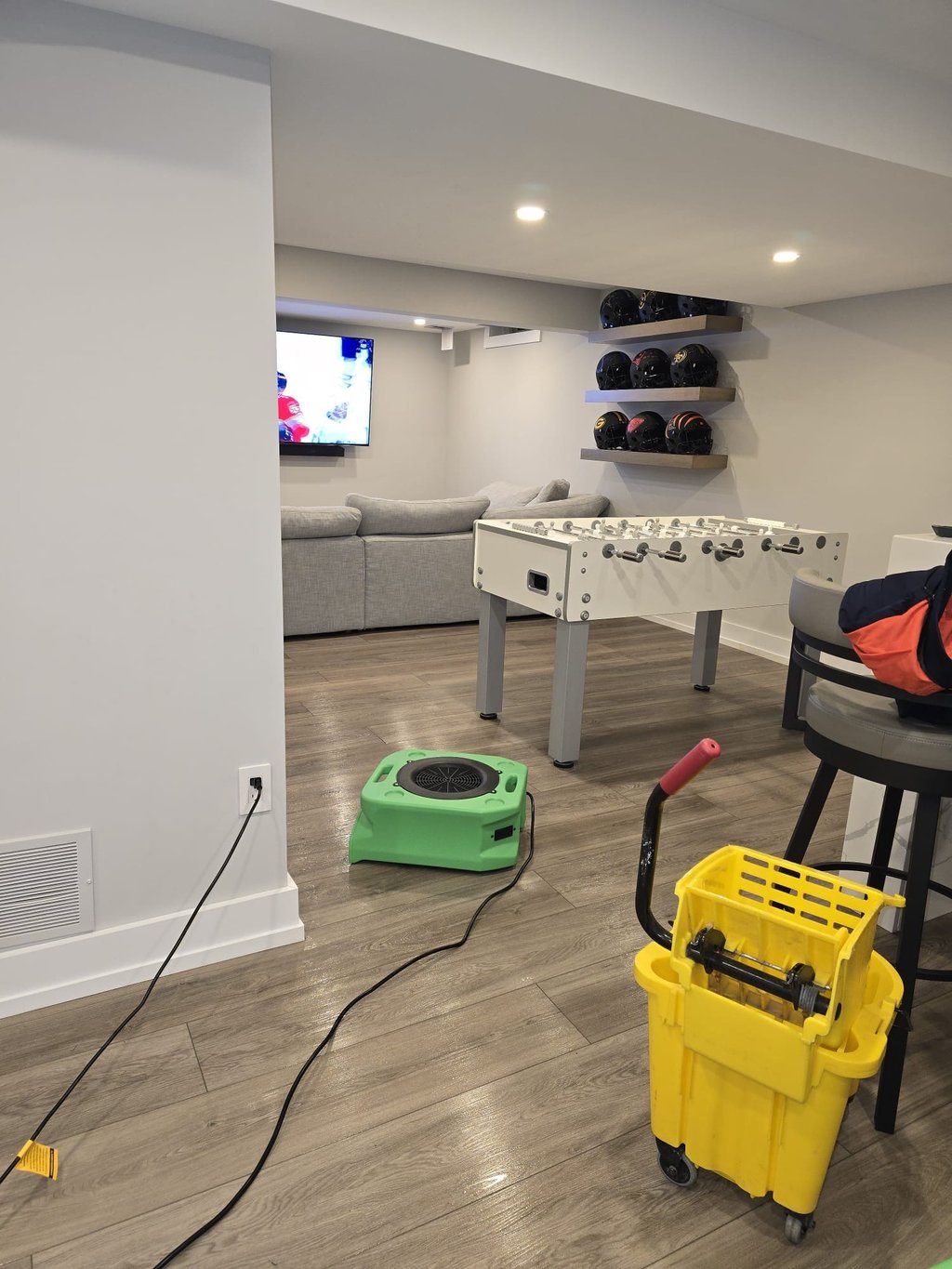
Set up drying equipment
Prevent structural damage
Remove What You Can
If it’s safe:
Move furniture and valuables out of the water
Lift items off the floor
Remove rugs and wet materials
Do not try to save everything — porous items exposed to contaminated water often need to be discarded.
Document Everything for Insurance
Before cleanup starts, take:
Photos of all affected areas
Videos of standing water and damage
Notes of what was damaged
This helps with your insurance claim and ensures proper coverage.
Contact Your Insurance Company
Report the damage as soon as possible.
They may ask:
What caused the flooding
When it started
Photos or documentation
If it’s a sewer backup, coverage depends on your policy.
Start Drying Immediately
Drying is critical.
Even after visible water is gone:
Moisture remains in drywall, flooring, and framing
This leads to mold and structural issues
Professional drying equipment (air movers + dehumidifiers) is usually required.
Watch for Mold Growth
Mold can start growing in as little as 24–48 hours.
Warning signs:
Musty smell
Discoloration on walls or ceilings
Increased humidity
If mold develops, it must be properly removed — not just cleaned.
Common Causes of Basement Flooding
Heavy rainfall
Sewer backup
Sump pump failure
Foundation cracks
Burst pipes
Identifying the cause helps prevent it from happening again.
Need Emergency Help?
Basement flooding is stressful — but you don’t have to deal with it alone.
At 911 Water Damage Experts Hamilton, we provide:
24/7 emergency response
Fast water extraction and drying
Full cleanup and restoration
Insurance claim support
📞 Call 289-426-3085 now for immediate help